Business acquisition, sale and financing: our M&A insights

At Collaboration Capital, we support executives, buyers and investors at every stage of a corporate finance transaction. Here you'll find our expert insights on business acquisition, sale and financing: M&A methodology, valuation, financial structuring and lessons learned from real transactions.

All our articles

Browse all our publications on business acquisition, sale and financing, organised by topic.

Vendor Loan: Having Part of the Acquisition Financed by the Seller

Understand how vendor financing works, its benefits, risks, and best practices for structuring a secure financing solution in a business acquisition or sale.
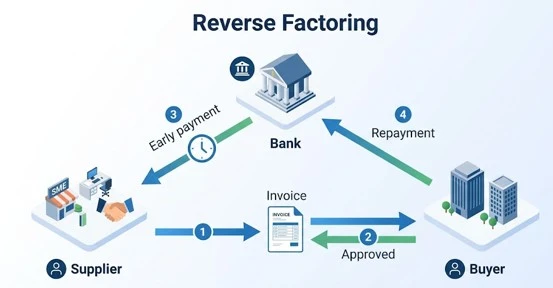
Reverse factoring

Definition, How It Works, and Benefits: How Reverse Factoring Optimizes Your Cash Flow While Securing Your Suppliers' Payments

All About Instant Business Loans (instant loans)

Need quick financing? Understand how instant business loans work, their eligibility criteria, their rates, and the pitfalls to avoid.

How to turn around a struggling business – The Tapie method.

Acquiring a distressed company can be highly profitable: the Tapie method decoded, step by step, with its value creation levers.

Confidentiality : what really works

How to truly protect M&A confidentiality: NDAs, data rooms, best practices, and pitfalls that compromise a deal.

Everything you need to know about factoring

Factoring: definition, how it works, costs, and use cases to finance your cash flow by selling your customer invoices. The complete guide.

Buying an Off-Market Company: Advantages, Risks,and Best Practices

Buying an off-market business: less competition, better terms, but risks to manage. Our best practices for success.

The LOI in Mergers & Acquisitions

The Letter of Intent (LOI) structures any M&A transaction: its content, key clauses, legal scope, and mistakes to avoid before signing.

Financing Your Business or Project with an SPV

The SPV (Special Purpose Vehicle) enables financing an acquisition or a project by ring-fencing the risk: structure, benefits, and legal framework explained.

Corporate Venture

Corporate Venture: How Large Corporations Invest in Startups to Innovate, Diversify, and Accelerate External Growth

What is the impact of the recession on a merger and acquisition transaction ?

Recession and M&A: How an economic downturn reshapes valuations, financing, and negotiation, and how to turn it into an acquisition opportunity.

How to choose your investment bank for an M&A transaction ?

Choosing the right investment bank is crucial for a successful M&A transaction: selection criteria, fees, and questions to ask before engaging.

Human relations in mergers and acquisitions

Why the human factor is critical in M&A and how to manage teams for successful integration.

How to succeed in an M&A operation abroad ?

Cultural Differences, Legal Framework, and Risks: The Keys to Successful International M&A

M&A Software – Why does your business need it ?

M&A software centralizes deal flow, data rooms, and transaction tracking: why it's becoming indispensable for boosting efficiency and security.

New tools for M&A operations

An overview of new digital tools and AI transforming M&A operations, from sourcing to due diligence.

The role of group work during an M&A transaction

An M&A transaction involves leaders, advisors, and experts: why team coordination directly determines deal success.

How to increase your M&A deal flow ?

Grow Your M&A Deal Flow: Sourcing Strategies, Network, and Tools to Generate More Qualified Deal Opportunities.

4 tips for successfully integrating a target customer

Post-acquisition integration is key to deal success: 4 practical tips for successful target integration and securing synergies.

How to evaluate an acquisition opportunity ?

Evaluating an Acquisition Opportunity: Financial, Strategic, and Valuation Criteria to Identify the Right Target and Avoid Bad Deals.

External Growth for the company

External growth accelerates development through acquisition: advantages, financing methods, and key success factors of a build-up strategy.

Business acquisition: succeeding in external growth

Acquiring a company — through buyout, external growth or takeover — accelerates development, opens up a new market or brings in a key skill set. Our articles detail the steps of a successful acquisition: targeting, approach, letter of intent (LOI), due diligence and closing.

Business sale and transfer: maximising value and securing the deal

Selling your company is a strategic step that is often prepared several years in advance. From valuation to negotiation, including documentation and the tax aspects of the transfer, our analyses help executives maximise the value of their company while securing the transaction.

Business financing: the levers to fund your projects

Acquisition, development, working capital needs: every project calls for a tailored financing solution. Our experts decode the main levers available to executives.

Financing a buyout or external growth

SPV structuring, senior debt, mezzanine debt or vendor loan: we explain how to structure the financing of an acquisition and activate leverage.

Financing the operating cycle

Factoring, reverse factoring and cash flow solutions: discover how to finance your working capital needs and smooth out your collections.

Fast and alternative financing

Instant loans and alternative financing let you seize an opportunity without delay. Estimate your options in just a few minutes.

M&A method and tools: valuation, due diligence and AI

Beyond transactions, we share our method: valuation methods (DCF, multiples, adjusted net book value), conducting due diligence, legal structuring (SPV, representations and warranties) and the use of artificial intelligence to speed up your M&A analyses.

Frequently asked questions about business acquisition, sale and financing

What is the difference between an acquisition and a merger?

In an acquisition, one company buys another, which becomes a subsidiary or ceases to exist: control changes hands. In a merger, two companies combine into a single entity, either newly formed or absorbing. An acquisition sets a buyer against a seller, whereas a merger aims for a more balanced combination of the two companies.

Icon - Elements Webflow Library - BRIX Templates

How is a company valued before a sale?

Three main families of methods coexist: the asset-based approach (adjusted net book value), the cash flow approach (discounting future cash flows, or DCF) and the market approach using multiples (comparison with comparable transactions or listed companies). In practice, several methods are combined to establish a value range.

Icon - Elements Webflow Library - BRIX Templates

What is a letter of intent (LOI) in M&A?

The letter of intent, or LOI, formalises a buyer's interest and the main terms of the project: indicative price, scope, timeline, exclusivity and conditions precedent. Generally non-binding on the final price, it frames the due diligence and negotiation phase before the definitive agreement is signed.

Icon - Elements Webflow Library - BRIX Templates

What is an SPV and what is it used for in a buyout?

An SPV (Special Purpose Vehicle), or project company, is a structure created specifically to carry out a transaction, for example the buyout of a company. It isolates the acquisition debt, brings together several investors and optimises the structure — in particular the leverage effect within an LBO.

Icon - Elements Webflow Library - BRIX Templates

How do you finance the buyout of a company?

Financing a buyout generally combines equity contributions, bank debt (senior debt), sometimes mezzanine debt and a vendor loan. The structure often relies on leverage via an SPV. The choice depends on the size of the transaction, the target's repayment capacity and the profile of the buyers.

Icon - Elements Webflow Library - BRIX Templates

What is factoring and reverse factoring?  

Factoring allows a company to sell its customer invoices to a factor in order to be paid immediately, without waiting for the due date. Reverse factoring, initiated by the buyer, enables suppliers to be paid quickly while preserving the buyer’s cash flow. Both solutions finance working capital needs.

Icon - Elements Webflow Library - BRIX Templates

How long does a sale or acquisition transaction take?

An M&A transaction generally spans 6 to 12 months between the first discussions and closing, depending on the complexity of the deal, the quality of the preparation and the duration of the due diligence. Upstream preparation (valuation, documentation, legal tidying-up) can itself begin several years before the transaction.

Icon - Elements Webflow Library - BRIX Templates